







Hiển thị các bài đăng có nhãn set up factory in Vietnam. Hiển thị tất cả bài đăng

Thứ Năm, 9 tháng 1, 2025

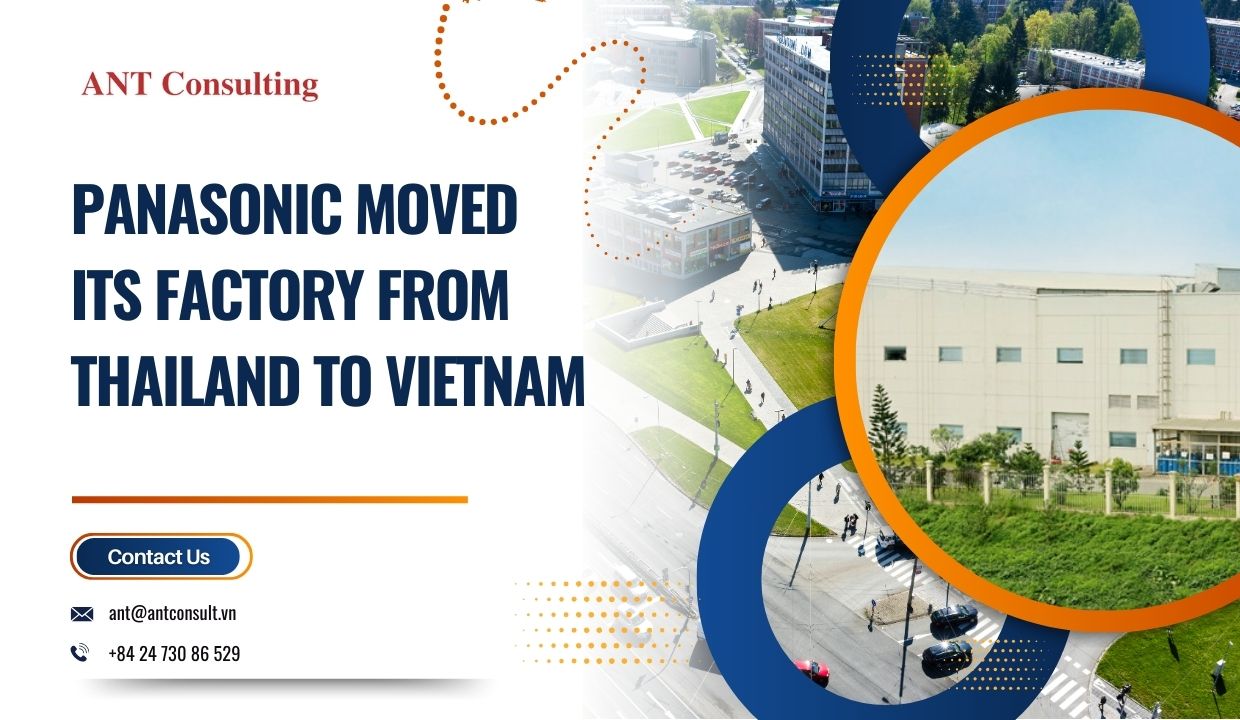
Panasonic Moved Its Factory from Thailand To Vietnam


Panasonic will close a large factory outside Bangkok – Thailand early this fall and move production to set up factory in Vietnam to get better production efficiency.

Specifically, according to Nikkei, Panasonic’s factory in Bangkok will stop producing washing machines in September 2020 and refrigerators in October 2020. The plant itself will be closed in March 2021, a research and development center will also be closed.

About 800 employees currently working at the factory in Bangkok will be laid off, but will also be recruited to new positions in the same business. By moving production to Vietnam, Panasonic will save a lot of costs.

Panasonic’s factory in Vietnam is currently the largest refrigerator and washing machine manufacturing center in Southeast Asia, the plant’s production capacity has now exceeded the required threshold.

This movement also reflects a new phase in manufacturing sector of Southeast Asia. Since the 1970s, Japanese electronics manufacturers have moved their production domestically to Singapore and Malaysia when the Yen increased rapidly because of the exchange rate floating policy that was applied for the first time and hurt the price competitiveness of Japanese goods. After that, production activities were transferred to countries like Thailand because of the increasing salary in Singapore.

Now, businesses are looking for cheaper places and also want to gain deeper access to markets where the demand for refrigerators, washing machines and microwaves is increasing in populous countries in Southeast Asia such as Indonesia, Philippines and Vietnam.

Panasonic has been producing home appliances in Thailand since 1979. The total output that Panasonic produces in Southeast Asia after the latest change will not diminish.

Panasonic currently employs about 8,000 workers in Vietnam. Not only producing large appliances, the local Panasonic factory also produces TVs, cordless phones, terminal card payment devices and industrial equipment.

Panasonic is currently in the process of restructuring with the goal of reducing costs by 100 billion yen or about 930 million USD in the fiscal year ending in March 2022. Panasonic is also considering continuing to adjust equipment manufacturing operations. Last year, Sharp also increased its capacity to produce washing machines and refrigerators in Indonesia by 30% and 20%, respectively.

Finding the right business partner in Vietnam is also important. We recommend doing research on the reputation of the company and individual shareholders, corporate or individual, gathering publicly available company information, and performing background checks on key personnel to find potential risks in cooperation. Working with a reliable partner can help achieve economic benefits, saving time and money in business.


Thứ Năm, 26 tháng 12, 2024

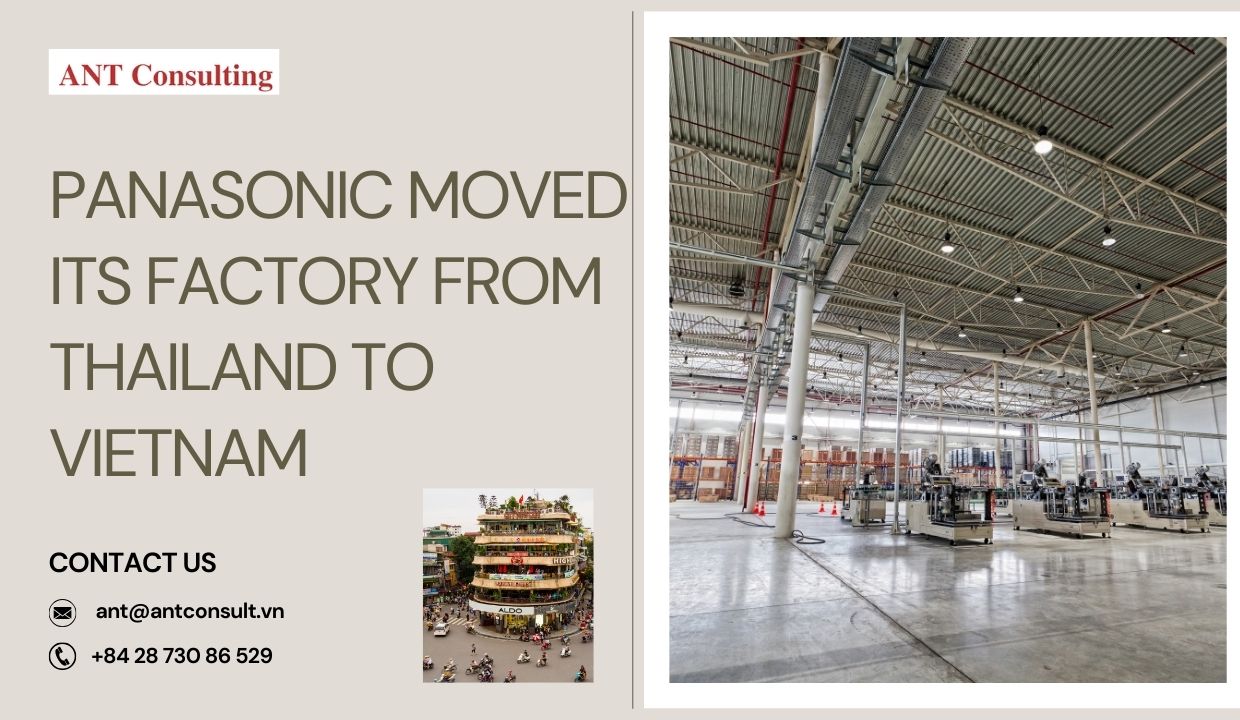
Panasonic Moved Its Factory from Thailand To Vietnam


Panasonic will close a large factory outside Bangkok – Thailand early this fall and move production to set up factory in Vietnam to get better production efficiency.

Specifically, according to Nikkei, Panasonic’s factory in Bangkok will stop producing washing machines in September 2020 and refrigerators in October 2020. The plant itself will be closed in March 2021, a research and development center will also be closed.

About 800 employees currently working at the factory in Bangkok will be laid off, but will also be recruited to new positions in the same business. By moving production to Vietnam, Panasonic will save a lot of costs.

Panasonic’s factory in Vietnam is currently the largest refrigerator and washing machine manufacturing center in Southeast Asia, the plant’s production capacity has now exceeded the required threshold.

This movement also reflects a new phase in manufacturing sector of Southeast Asia. Since the 1970s, Japanese electronics manufacturers have moved their production domestically to Singapore and Malaysia when the Yen increased rapidly because of the exchange rate floating policy that was applied for the first time and hurt the price competitiveness of Japanese goods. After that, production activities were transferred to countries like Thailand because of the increasing salary in Singapore.

Now, businesses are looking for cheaper places and also want to gain deeper access to markets where the demand for refrigerators, washing machines and microwaves is increasing in populous countries in Southeast Asia such as Indonesia, Philippines and Vietnam.

Panasonic has been producing home appliances in Thailand since 1979. The total output that Panasonic produces in Southeast Asia after the latest change will not diminish.

Panasonic currently employs about 8,000 workers in Vietnam. Not only producing large appliances, the local Panasonic factory also produces TVs, cordless phones, terminal card payment devices and industrial equipment.

Panasonic is currently in the process of restructuring with the goal of reducing costs by 100 billion yen or about 930 million USD in the fiscal year ending in March 2022. Panasonic is also considering continuing to adjust equipment manufacturing operations. Last year, Sharp also increased its capacity to produce washing machines and refrigerators in Indonesia by 30% and 20%, respectively.

Finding the right business partner in Vietnam is also important. We recommend doing research on the reputation of the company and individual shareholders, corporate or individual, gathering publicly available company information, and performing background checks on key personnel to find potential risks in cooperation. Working with a reliable partner can help achieve economic benefits, saving time and money in business.


Thứ Ba, 4 tháng 4, 2023

Panasonic Moved Its Factory from Thailand To Vietnam


Panasonic will close a large factory outside Bangkok – Thailand early this fall and move production to set up factory in Vietnam to get better production efficiency.


Specifically, according to Nikkei, Panasonic’s factory in Bangkok will stop producing washing machines in September 2020 and refrigerators in October 2020. The plant itself will be closed in March 2021, a research and development center will also be closed.

About 800 employees currently working at the factory in Bangkok will be laid off, but will also be recruited to new positions in the same business. By moving production to Vietnam, Panasonic will save a lot of costs.

Panasonic’s factory in Vietnam is currently the largest refrigerator and washing machine manufacturing center in Southeast Asia, the plant’s production capacity has now exceeded the required threshold.

This movement also reflects a new phase in manufacturing sector of Southeast Asia. Since the 1970s, Japanese electronics manufacturers have moved their production domestically to Singapore and Malaysia when the Yen increased rapidly because of the exchange rate floating policy that was applied for the first time and hurt the price competitiveness of Japanese goods. After that, production activities were transferred to countries like Thailand because of the increasing salary in Singapore.

Now, businesses are looking for cheaper places and also want to gain deeper access to markets where the demand for refrigerators, washing machines and microwaves is increasing in populous countries in Southeast Asia such as Indonesia, Philippines and Vietnam.

Panasonic has been producing home appliances in Thailand since 1979. The total output that Panasonic produces in Southeast Asia after the latest change will not diminish.

Panasonic currently employs about 8,000 workers in Vietnam. Not only producing large appliances, the local Panasonic factory also produces TVs, cordless phones, terminal card payment devices and industrial equipment.

Panasonic is currently in the process of restructuring with the goal of reducing costs by 100 billion yen or about 930 million USD in the fiscal year ending in March 2022. Panasonic is also considering continuing to adjust equipment manufacturing operations. Last year, Sharp also increased its capacity to produce washing machines and refrigerators in Indonesia by 30% and 20%, respectively.

Finding the right business partner in Vietnam is also important. We recommend doing research on the reputation of the company and individual shareholders, corporate or individual, gathering publicly available company information, and performing background checks on key personnel to find potential risks in cooperation. Working with a reliable partner can help achieve economic benefits, saving time and money in business.

Thứ Ba, 16 tháng 8, 2022

Panasonic Moved Its Factory from Thailand To Vietnam | ANT Consulting

  Panasonic will close a large factory outside Bangkok – Thailand early this fall and move production to set up factory in Vietnam to get better production efficiency.


Specifically, according to Nikkei, Panasonic’s factory in Bangkok will stop producing washing machines in September 2020 and refrigerators in October 2020. The plant itself will be closed in March 2021, a research and development center will also be closed.

About 800 employees currently working at the factory in Bangkok will be laid off, but will also be recruited to new positions in the same business. By moving production to Vietnam, Panasonic will save a lot of costs.

Panasonic’s factory in Vietnam is currently the largest refrigerator and washing machine manufacturing center in Southeast Asia, the plant’s production capacity has now exceeded the required threshold.

This movement also reflects a new phase in manufacturing sector of Southeast Asia. Since the 1970s, Japanese electronics manufacturers have moved their production domestically to Singapore and Malaysia when the Yen increased rapidly because of the exchange rate floating policy that was applied for the first time and hurt the price competitiveness of Japanese goods. After that, production activities were transferred to countries like Thailand because of the increasing salary in Singapore.

Now, businesses are looking for cheaper places and also want to gain deeper access to markets where the demand for refrigerators, washing machines and microwaves is increasing in populous countries in Southeast Asia such as Indonesia, Philippines and Vietnam.

Panasonic has been producing home appliances in Thailand since 1979. The total output that Panasonic produces in Southeast Asia after the latest change will not diminish.

Panasonic currently employs about 8,000 workers in Vietnam. Not only producing large appliances, the local Panasonic factory also produces TVs, cordless phones, terminal card payment devices and industrial equipment.

Panasonic is currently in the process of restructuring with the goal of reducing costs by 100 billion yen or about 930 million USD in the fiscal year ending in March 2022. Panasonic is also considering continuing to adjust equipment manufacturing operations. Last year, Sharp also increased its capacity to produce washing machines and refrigerators in Indonesia by 30% and 20%, respectively.

Finding the right business partner in Vietnam is also important. We recommend doing research on the reputation of the company and individual shareholders, corporate or individual, gathering publicly available company information, and performing background checks on key personnel to find potential risks in cooperation. Working with a reliable partner can help achieve economic benefits, saving time and money in business.

Thứ Hai, 2 tháng 5, 2022

Cooperation between Vietnam and Japan After the Covid Epidemic | ANT Lawyers


On May 15, 2020, the Minister of Planning and Investment met Ambassador Mr. Yamada Takio (Japan) on the occasion of starting his working term in Vietnam. The parties spent time welcoming and sharing a number of problems that need to be resolved to promote investment activities between the two countries in the context of the Covid-19 epidemic, including promoting public investment, promoting investment in the private sector, attracting investors to set up company, factory and implement investment into export processing zones in Vietnam.

The Ambassador said there are currently more than a thousand Japanese experts who wish to have work permit, investment visa, temporary residece card to go to Vietnam to restore business production. In addition, Japanese small and medium enterprises are very interested in the Vietnam market. Japan Government has provided 23.5 billion yen (USD 220 million) to encourage domestic enterprises to transfer production activities to Southeast Asian countries, including Vietnam, which is an opportunity for Vietnam to attract FDI to register investment project in setting up factory in Vietnam.

Following the the investment shift after the US-China Trade war (2019) and the Covid-19 epidemic, many Japanese investors intend to withdraw from China to invest in Vietnam to set up factory, and company and form a new supply chain. Accordingly, Vietnam will have a plan to create a working group to attract Japanese enterprises to invest in the fields and provinces that Vietnam wishes to contribute more to the socio-economic development of Vietnam. In 2019, Japan is the fourth-largest FDI country in Vietnam, the second largest investment partner in Vietnam implementing the project, with a total investment of USD 59.3 billion.

With its advantages and experience, Japanese investors are investing in Vietnam in the fields of professional science, technology, information technology, wholesale, retail, engineering and real estate. These industries are the advantages of Japanese investors when investing in Vietnam, which it not only brings benefits to investors but also helps Vietnam to learn management experience and operation from Japan, helping Vietnam to apply to develop the domestic economy.

The Vietnamese representative emphasized the importance to attract Japanese enterprises to invest smoothly and successfully in Vietnam, including large and small and medium-sized enterprises to contribute more to the socio-economic development of Vietnam. At the same time, the Ministry of Planning and Investment continued to work closely with the Embassy as well as with the Ambassador’s individual to bring closer cooperation between the two countries.

Thứ Tư, 29 tháng 9, 2021

How Lawyers Could Assist to Collect Debt | ANT Lawyers

 The collection of bad debt and late payment after sales or services are difficult and sensitive jobs in Vietnam. Therefore, such job has always been handled by the law firms in Vietnam whom is aware of law and the process.  The lawyers in Vietnam whom receive the case should be well informed about the legal nature of the debt profile and they must have skills on debt recovery.

Depending on the nature of each case and each specific dossier, the law firm can be able to make suitable plans to deal accordingly with the debtor.

There will be a number of methods and different solutions in the work of debt recovery. However, the recovery of debt will apply the following two basic methods:


– Mediation and agreement methods are ways that lawyers and legal professionals will come directly to negotiate and persuade debtor to make their debt payment schedule based on understanding of law and various drivers.

– Resolve through court proceeding, or arbitration.  This method will be applied in the case that debtors are unwilling to cooperate, trying to evade responsibility, or the payment plan is delayed.

Time limit for settling the debt collection is influenced by different factors but the two most important factors are the legality of the documents and the payment capability of debtors.

There are debtors, after being explained the consequences and losses of non-payment, late payment by lawyers and legal experts, they were aware of and make plans to pay debts.

But there are debtors that the client requires the support and intervention of the state authorities.  In such case, the duration of the case will be prolonged.

Thứ Hai, 13 tháng 9, 2021

Why Investors Should Set-up Business in Phu Quoc? | ANT Lawyers

The improvement in infrastructure system along with the preferential policies have stimulated investors to come to Phu Quoc to set-up company and do business.

Phu Quoc, an island in Kien Giang of Vietnam is in the top of three islands having tourism potential in Southeast Asia comparable to Phuket in Thailand and Bali in Indonesia. Phu Quoc has become a magnet for attracting huge investment flows from foreign investors in the area of real estate, entertainment, casinos, restaurant or food and beverage service business.

Phu Quoc has temperate weather throughout the year. There are also fresh and friendly forest – sea ecology and the modern transport system on the island with international airport and international hospital. Moreover, many infrastructure projects and international schools are under construction, which are necessary and favorable conditions to invite and attract investors to the Pearl Island for doing business.


Capital inflows to Phu Quoc have really exploded after the “knots” in investment were removed. The new airport went into operation that can welcome larger aircraft and serve more flights, in which there are more international direct flights from China, Singapore, Russia and Cambodia. The 51km long radial route on the island has been basically completed; the road around the island and the branch roads are also being deployed. The power grid was pulled from the mainland to the island, replacing the very high cost gasoline power in the past.

The real estate and tourism consultants all agree that Phu Quoc fully convergent elements of an attractive beach for tourist with year-round sunshine, many beautiful beaches such as Long Beach, Truong Beach, Khem Beach and immense virgin forest. Moreover, Phu Quoc has a strategic location with just 1-2 hours flight to the key tourism markets in Southeast Asia.

Both investment and tourism in Phu Quoc have entered the acceleration phase. By the end of July 2015, Phu Quoc has attracted nearly 200 investment projects, including 136 projects that are being implemented in the area of over 5,100 ha with total registered capitals of 6.5 billion USD. Just one part of those projects become reality then it will make Phu Quoc to become a leading tourist destination in Vietnam, ahead of Da Nang and Nha Trang, competing with the top destinations in the area as Phuket and Bali.

Some of the largest Vietnam corporations such as Vingroup, Sun Group, CEO Group, BIM Group are implementing the huge projects that could alter the appearance of the island. In which the giant in real estate sector – Vingroup has invested projects as: Vinpearl Resort on an area of 300 ha in Long Beach, the combining of golf course and safari zoo on an area of more than 2,000 ha, and the 80 ha commercial complex.

The improvement in infrastructure system along with the preferential business and legal environments i.e. favourable land rental rates, corporate income tax, exemption of visa for foreign tourists make Phu Quoc island of Kien Giang, Vietnam a new attractive place for investment.

ANT Lawyers, a law firm in Vietnam could offer service to set-up company in Phu Quoc through its affiliate office. We assist clients needing legal service in obtaining investment certificate, business registration, or other licensing procedures in Phu Quoc, Kien Giang Province, Vietnam.

Why Investors Should Set-up Business in Phu Quoc? | ANT Lawyers

The improvement in infrastructure system along with the preferential policies have stimulated investors to come to Phu Quoc to set-up company and do business.

Phu Quoc, an island in Kien Giang of Vietnam is in the top of three islands having tourism potential in Southeast Asia comparable to Phuket in Thailand and Bali in Indonesia. Phu Quoc has become a magnet for attracting huge investment flows from foreign investors in the area of real estate, entertainment, casinos, restaurant or food and beverage service business.

Phu Quoc has temperate weather throughout the year. There are also fresh and friendly forest – sea ecology and the modern transport system on the island with international airport and international hospital. Moreover, many infrastructure projects and international schools are under construction, which are necessary and favorable conditions to invite and attract investors to the Pearl Island for doing business.


Capital inflows to Phu Quoc have really exploded after the “knots” in investment were removed. The new airport went into operation that can welcome larger aircraft and serve more flights, in which there are more international direct flights from China, Singapore, Russia and Cambodia. The 51km long radial route on the island has been basically completed; the road around the island and the branch roads are also being deployed. The power grid was pulled from the mainland to the island, replacing the very high cost gasoline power in the past.

The real estate and tourism consultants all agree that Phu Quoc fully convergent elements of an attractive beach for tourist with year-round sunshine, many beautiful beaches such as Long Beach, Truong Beach, Khem Beach and immense virgin forest. Moreover, Phu Quoc has a strategic location with just 1-2 hours flight to the key tourism markets in Southeast Asia.

Both investment and tourism in Phu Quoc have entered the acceleration phase. By the end of July 2015, Phu Quoc has attracted nearly 200 investment projects, including 136 projects that are being implemented in the area of over 5,100 ha with total registered capitals of 6.5 billion USD. Just one part of those projects become reality then it will make Phu Quoc to become a leading tourist destination in Vietnam, ahead of Da Nang and Nha Trang, competing with the top destinations in the area as Phuket and Bali.

Some of the largest Vietnam corporations such as Vingroup, Sun Group, CEO Group, BIM Group are implementing the huge projects that could alter the appearance of the island. In which the giant in real estate sector – Vingroup has invested projects as: Vinpearl Resort on an area of 300 ha in Long Beach, the combining of golf course and safari zoo on an area of more than 2,000 ha, and the 80 ha commercial complex.

The improvement in infrastructure system along with the preferential business and legal environments i.e. favourable land rental rates, corporate income tax, exemption of visa for foreign tourists make Phu Quoc island of Kien Giang, Vietnam a new attractive place for investment.

ANT Lawyers, a law firm in Vietnam could offer service to set-up company in Phu Quoc through its affiliate office. We assist clients needing legal service in obtaining investment certificate, business registration, or other licensing procedures in Phu Quoc, Kien Giang Province, Vietnam.

Thứ Sáu, 10 tháng 9, 2021

Granting Investment Registration Certificate | ANT Lawyers

As Vietnam integrates further into the global supply chain, foreigners are more and more encouraged to invest in Vietnam in many areas for pursuing profit. The foreign direct investment of the foreigners is required to be registered at Vietnam state authority to protect the rights of the investor.

According to the Law on Investment 2014, investment projects of foreign investors; projects of setting up a economic organization in which foreign investors holding 51% of charter capital or more or the majority of the general partners are foreigners in a partnership; projects of BCC contract between domestic investors and foreign investors or between domestic investors and economic organization which foreign investors holding 51% of charter capital or more or the majority of the general partners are foreigners shall need to conduct the procedure of applying investment registration certificate as regulations of law.

Preparation of dossier


A written request for permission for execution of the investment project;
A copy of the ID card or passport (if the investor is an individual); a copy of the Certificate of establishment or an equivalent paper that certifies the legal status of the investor (if the investor is an organization).
An investment proposal that specifies: investor(s) in the project, investment objectives, investment scale, investment capital, method of capital rising, location and duration of investment, labor demand, requests for investment incentives, assessment of socio-economic effects of the project;
Copies of any of the following documents: financial statements of the last two years of the investor; commitment of the parent company to provide financial support; commitment of a financial institutions to provide financial support; guarantee for investor’s financial capacity; description of investor’s financial capacity;
Demand for land use; if the project does not use land allocated, leased out by the State, or is not permitted by the State to change land purposes, then a copy of the lease agreement or other documents certifying that the investor has the right to use the premises to execute the project shall be submitted;
Explanation for application of technologies to the project which specifies: names of technologies, origins, technology process diagram, primary specifications, conditions of machinery, equipment and primary technological line;
The business cooperation contract (BCC) (if the project is executed under a BCC).

Order and Procedure
Investors submit the dossier at Department of Planning and Investment (or management of economic zones, high-tech zones);
Within 15 working days from the date of receipt of a complete and valid dossier, the competent authority shall grant the investment registration certificate for investors.

In practice, the time duration would be lengthened due to the time for preparation of documents from investor, getting them notarized, legalized and authenticated before being accepted in Vietnam. The documents in foreign languages shall need to be translated into Vietnamese. The actual time for processing paper at the State authority would also last longer in practice when the State authority evaluate the project plan of the investor to ensure that its investment purpose is achievable economically and in accordance to the regulations of Vietnam. It is advised that the client engage professional law firm in Vietnam to assist with advisory and investment registration process.